Saturday, May 05, 2007

Arangkada for May 6, 2007

       MAO RA NI?


       Sa labing unang higayon, nakasud ko sa Cebu International Convention Center.  Salamat sa gipasiugdahan ni Mandaue City Acting Mayor Ading Seno nga pagbukas sa CICC ngadto sa Sugbuanong mga magbubuhis pagtimaan sa tinuig nga pangilin sa Dakbayan sa Mandaue.  Kabahin ko sa unang hut-ong sa mga nitubag sa pagdapit ni Seno.  Kinsa nipasabot nga pipila ray nakatunga kay tingtrabaho pa, apan nahurot nang mga tiket nga giapud-apod sa iyang buhatan alang sa adlawng Dominggo.

        Gipakita mi og audio-visual presentation nga nagpahinumdom sa kamahinungdanon ug kamakasaysayanon sa papel sa CICC sa tigom sa mga pangu sa kanasuran sa habagatan ug silangang Asya niadtong Enero.  Ug dayon gilibot na mi sa pinili nga mga lawak sa duha ka andana nga building, nga gihulagway sa Agence France Presse (AFP) nga "morang gamayng shopping mall nga way mga bintana."

-o0o-

        Si Mayor Seno wa kapugong sa iyang kaugalingon sa pag-ingon nga pipila ka bahin sa CICC mas maayong tan-awon sa telebisyon kay sa linawas.  Niuyon niya ang ubang nanguyog sa guided tour nga nitawag sa akong pagtagad (ang uban mas kusog og tingog kay sa uban nga kuwang na lag diyutay nga naghagawhaw, ambot tungod tingali sa kaikog sa mahigalaon nga mga tinugyanan sa Kapitolyo nga mapailubong nigiya namo aron pagtino nga di mi mangasaag ni manud sa gitak-opang mga lawak) sa mosunod nga ilang nabantayan sa upat pa ka buwan nga building:

·         Pipila ka bahin sa bungbong sa lobby nangliki na;

·         Tumoy sa bungbong sa ikaduhang andana nahup-ak na ug gamay na lag kuwang nga matagak ang nagkawil-kawil nga tipaka;

·         Ang mouldings sa lobby nangahup-ak na;

·         Ang carpet sa plenary hall nagburutburot na;

·         Pipila ka pultahan sa mga pansayan naguba na; ug

·         Peryodista nga nakasud atol sa summit ang nitudlo namo sa dapit nga nagtulo sa pagbunok sa uwan.

-o0o-

        Apan ang labing makahuloganon nga paniid naggikan sa usa pundok sa batan-ong mga lalaki nga nituaw (pasaligan hinuon tika nga hinay gihapong ilang tingog ug wa madunggi sa mga tagduma):  "Mao ra ni?"

        Klaro kaayo nga kasagaran sa among kaubanan nagsubay sa mga balita.  Mahimo ganing nakadungog sila sa pasangil ni Crisologo Saavedra nga dul-an na sa bilyon ang tinuod nga naggasto sa CICC.  O sa pag-angkon sa Kapitolyo nga madugangan pang P581 milyones nga gasto tungod sa "reconfiguration."  Lisod tinuod nga pangitaon ang makalilisang nga gasto sa kayano sa building.

        Ang bisan unsang pagduda sa mga nanguyog sa kamakiangayon sa gasto napapas dihang ila ming gida sa luho nga pultahan nga nag-ambo sa mga barungbarong sa makaluluoy nga mga biktima sa sunog sa Guizo ug Mantuyong nga wa pang kapabarug pagbalik sa ilang mga panimay.  [30]  leo_lastimosa@abs-cbn.com

Friday, May 04, 2007

Arangkada for May 5, 2007

        CICC BUKSAN SA PUBLIKO


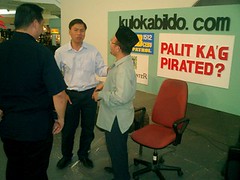
        Si Mandaue City Acting Mayor Ading Seno malipayong nipahibawo atol sa sinemanang Kapamilya Media Forum sa DYAB Abante Bisaya ug Sky Cable nga gipahigayon sa SM City Cebu Entertainment Plaza nga makaangkon na gyod og kahigayonan ang Sugbuanong mga magbubuhis pagtan-aw sa Cebu International Convention Center (CICC).   Matod ni Seno nga, pinaagi ning iyang gasa sa mga Mandauehanon nga magsaulog sa ilang tinuig nga kapiyestahan karong buwana, makaangkon na gyod og kahigayonan ang katawhan pagsusi makiangayon bang naggasto ang buhis nga ilang siningtan ug hinagoan.

        Upat ug tunga ka takna ra hinuong buksan ang CICC ngadto sa publiko, gikan sa alas-9 hangtod alas-11 sa buntag ug gikan sa alas-2 hangtod sa alas-4:30 sa hapon.  50 lang ka tawo ang pasudlon sa usa ka higayon aron kahatagan sila og guided tour.   Ug sa lakang nga makapaamgo sa iyang mga kaatbang unsa kamahinungdanon ang iyang pagka acting mayor sa Mandaue, malipayong gipahibawo ni Seno nga ang tanang gustong mosud sa CICC kinahanglang mokuha og pases gikan sa iyang buhatan.

-o0o-

        Si Acting Mandaue City Mayor Jonas Cortes, kandidato pagka mayor sa Team Honesty, kinsa naglingkod tapad ni Seno atol sa media forum, nipahibawo sa iyang plano pagtugyan sa pagduma sa CICC ngadto sa pribadong sektor aron pagtino nga di ni mausik.   Gikuwestiyon ni Cortes ang kamapuslanon sa gipatuman karon nga hinugpong nga pagduma tali sa Kapitolyo sa Sugbo ug sa Mandaue City Hall.  Apan sa samang higayon nitataw si Cortes nga angayng tinud-on pagsusi nasubay bang tanang mga lagda sa dinalidali nga pagtukod sa CICC alang sa niaging 12 th Asean Summit.

        Sa iyang bahin, si kanhi Mandaue City Councilor Magno Dionson, kandidato pagka mayor sa Bando Mandaue Anak Bisaya, niingon nga di maayong tilimad-on ang tigbayon sa CICC alang sa Mandaue.   Kay nahimo ning tinubdan sa di maayong mga panghitabo sa Mandaue ug sa Sugbo.  Matod niya nasuspenso si kanhi mayor Teddy Ouano tungod sa mga eskandalo sa summit ug mahimong masuspenso sab ang uban pang lokal nga mga opisyal tungod sa mga pasangil sa overpricing ug ubang mga anomaliya sa CICC.

-o0o-

        Wa katunga sa media forum si Jonkie Ouano, kandidato pagka mayor sa Power Team 4.  Maong sa makausa pa napakyas na sang among pagsuway pag-abot sa tanang kandidato sa giisip nga usa sa labing higpit nga piniliay pagka mayor sa tibuok Sugbo.

        Nakahigayon si Cortes pagpakita sa pipila ka mga biktima sa pagpanghasi ug pagpangulata nga ilang gipasangil sa mga Ouano.  Nipasangil siya nga mga sakyanan sa City Hall ug kapolisan ang gigamit sa armadong mga tawo.   Nipasalig hinuon si Seno nga nagkasabot na sila si Mandaue City Police Director Alexander Abadinas paghimo og mga lakang aron pagtino nga di hingpit nga magkadugo ang nagpadayong kampanya sa Mandaue.   [30]  leo_lastimosa@abs-cbn.com

Saturday, November 04, 2006

Monday, October 23, 2006

DYAB Cebu Bakhaw Planting In Cotcot, Liloan


DYAB Cebu Bakhaw Planting In Cotcot, Liloan

DYAB Cebu Bakhaw Planting In Cotcot, Liloan

DYAB Cebu Bakhaw Planting In Cotcot, Liloan

DYAB Cebu Bakhaw Planting In Cotcot, Liloan Posted by Picasa

Sunday, September 24, 2006

Arangkada for September 25, 2006


       RAKET SA CELLPHONES


       Magpadayon ang pagpanulis ug pagpangawat sa cellular phones.  Kini bisan sa pasidaan ni Police Regional Office (PRO 7) Chief Silverio Alarcio nga gukdon ang mga mamalitay sa kinawat o tinulis nga cellphones.  Ug bisan sa plano sa National Telecommunications Commission (NTC) ug Malakanyang pagrehistro sa tanang cellphones aron mabadlong nang nisiaw nga pagpangawat ug pagpanulis, nga sa pipila ka kaso nisangpot sa pagpatay sa mga biktima.

        Mao ni pasidaan sa batan-ong computer technician, si Leonard Marano sa House of Skills sa Carbon, atol sa Kapamilya Media Forum sa DYAB Abante Bisaya ug Sky Cable sa SM City Entertainment Plaza.  Matod ni Marano puwerteng sayona rang tulion sa cellphones, nga bisan kon irehistro pang tanang units, pre-paid man o post-paid, nga makapasayon unta alang sa Smart, Globe ug Sun pagkandado sa nadagit nga mga telepono, maablihan ug mabaligya gihapon sa nagkalapad nga merkado sa mas-barato-bahala-nag-kadudahan-diin-gikan nga cellphones.

-o0o-

        Ang pasidaan ni Alarcio way unod.  Ang pagpamaligya sa kinawat ug tinulis nga cellphones hagbay rang nakabuylo nga wa mabaraw sa kapolisan.  Di na silang kaato pagtultol sa cell shops nga namurot ning maong raket, labaw pa silang inutil sa mas lapad ug mas tago nga binaligyaay sa way apelyidong kadalanan ug kabalayan.

        Ang labing dakong kaaway sa kapolisan dili ang mat-an ug hakog nga mga magpapatigayon kon dili ang minilyon ka mga ungo sa cellphones, kasagaran nila mga batan-on, nga mag-ilis og cellphones sama kapaspas sa pag-ilis nilag uyab ug sinina, nga nakumbinser nga gamitoy rang kahigayonan, salamat sa nagbaha ug nagkagagmay nga cellphones sa kalibotan, nga matsambahan sila sa mga tag-iya sa kinawat o tinulis nga mga telepono, labaw na sa mas-nihit-lisod-igkita-ug-nalinga-sa-Asean nga mga polis ni Alarcio.

-o0o-

        Mas masaaron untang plano sa NTC nga gitun-an sa Malakanyang nga rehistrasyon sa mobile phones.  Hangtod nga gisabligan og bugnawng tubig ni Marano.

        Matod ni Marano wa katabang sa kawsa sa kagamhanan ang gihimo sa Nokia nga pagbukas sa ilang codes ngadto sa ubang developers alang sa mas paspas nga paglambo sa ilang mga produkto.  Ang mga tag-iya sa telepono, bisan di na modangop sa technicians, makahimo na pag-usab sa codes sa ilang units, apil nang serial numbers, aron pagsagang sa virus.

-o0o-

        Nakadungog sa pasidaan ni Marano, si Engr. Bill Peralta sa NTC naningil sa pasalig sa mga kompaniya sa telekomunikasyon nga mas lisod nang tulion ang serial numbers sa ilang mga produkto.

Mas seryuso ang laing pasidaan ni Marano:  Tungod sa kadaghan na sa mga teleponong gituli, natsambahan nang serial numbers sa cellphones nga legal nga napalit.  Sa ato pa, bisan wa makawat ang imong cellphone, mahimong nakawat nang imong serial number ug may kailog ka na pag-access sa network sa mga higayon nga dinalian ang imong panginahanglan sa telepono.  [30]  leo_lastimosa@abs-cbn.com

Saturday, September 23, 2006

Arangkada for September 24, 2006


       ALELUYA SA ASEAN


       Mahimo ba nga si Ambassador Melchor Paynor, secretary general sa 12th Asean Summit Organizing Committee, motingob sa iyang panahon sa pagpangandam ug pagtino nga malampuson ang higanteng kalihokan unya sa Disyembre?  Ug mahimo bang iyang pasagdan ang lokal nga media sa pagtuman sa ilang gimbuhaton?

        Gihatagan siya og higayon sa mga haligi sa media sa Sugbo nga makahatag sa iyang sugyot unsay labing dagko ug mahinungdanong kalamboan nga mapaabot atol sa Asean Summit.  Apan giabusohan ni Paynor ang pagdapit sa mga tigpasiugda sa Press Freedom Week celebration karong tuiga pinaagi sa pag-insulto sa mga sakop sa media.

        Samtang katungdanan ni Paynor ang pagkumbinser sa media nga di pag-usik-usik sa kuwarta ug panahon ang atong pagduma sa Asean Summit, wa siyay katungod sa pagtudlo sa media unsaon pag-cover sa kalibotanong kalihokan.

-o0o-

        Wa kong katambong sa panel discussion sa Marcelo B. Fernan Cebu Press Center niadtong Biyernes kay nadungan man sa akong giduma nga Kapamilya Media Forum sa DYAB Abante Bisaya ug Sky Cable sa SM City.  Apan maayo ra sab.  Kay wa unta kong kapugong sa akong kaugalingon sa pagbaraw sa bugalbugal ni Paynor.

        Gitandi man god ni Paynor ang iyang giingong iresponsableng coverage sa lokal nga mga sakop sa media ug sa kalma nga coverage sa langyawng media.  Bisan pa kon iyang ginganlan ang tulomanon sa karibal namong network (nagpatuo kunohay nga wa niya tuyoa), tugoting motubag ko nga dakong bakak ang iyang pasangil.

        Ang kamatuoran mao nga samtang dunay iresponsableng mga sakop sa lokal nga media, duna say iresponsableng mga sakop sa langyawng media.  Ang pananglitan nga gihatag ni Paynor, nga nagsiyagit ang lokal nga reporter samtang pinahimutang ang tingog sa langyawng reporter, maoy pagmatuod sa kataphaw sa iyang kasayuran sa media nga angay siyang maghunahuna og kapitoan ug pito una mangahas sa pagpanghilabot.

-o0o-

        Ang gibiliban pag-ayo ni Paynor nga langyaw nga media nasakpang nagmaniobra og mga ebidensiya batok sa draft ni US Pres. George Bush (CBS News) ug nagda og live microphone ug nanglibak sud sa pansayan samtang nag-cover sa diskurso ni Bush sa anibersaryo sa trahedya sa New Orleans (CNN).  Dunay mga bulilyaso ang pipila ka sakop sa lokal nga media apan di sila igong sukaranan sa insulto ni Paynor.

        Nahadlok hinuon ko nga ang tinuod nga mensahe ni Paynor mao ang pagsuway paghimo sa media nga cheering squad sa Asean Summit.  Nga ato na lang pasagdan ug lingiw-lingiwan nga ilang gilaktod sa ngan sa summit ang kasagaran sa kapin na sa P2 bilyones nga balor sa mga transaksiyon aron pag-aleluya sa panagtagbo sa mga lider sa kahugpongan nga wa igdungog nga nihatag og importansiya sa kaayuhan sa kinabag-an sa katawhan sa ilang girepresentahan nga kanasuran.  [30]  leo_lastimosa@abs-cbn.com

Friday, September 22, 2006

Arangkada for September 23, 2006


      HAMBOG SA VIGILANTES


Bisan sa pagarpar ni PRO 7 Chief Silverio Alarcio ug sa ubang kadagkoan sa kapolisan, klarong taphaw ug marka pataka ang pagpada dinhi sa Sugbo sa kapin na sa 1,000 ka mga polis gikan sa Mindanao ug ubang bahin sa Kabisay-an:
  • Way giandam nga mga pinuy-anan alang sa dayo nga kapolisan, nga ang lokal nang mga opisyal maoy nagkara-kara pagtolda-tolda nila ug ang mga dayo maoy nahadiin-diin pagpangita og mga pansayan;
  • Way klaro unsay ilang mga gimbuhaton dinhi sa tulo ka buwan nilang pagpaabot sa Asean Summit, maong kasagaran nila morang nagbakasyon nga nagsuroy-suroy sa shopping malls ug ang nagbarug-barog sa kadalanan sige lang tabi nga maputol lang kon sal-otan og text; ug
  • Pipila sa mga polis wa nang kadawat sa ilang suholan ug mga benepisyo, kay klarong wa mahikay sa Kampo Crame ug sa ilang gigikanan nga units, sukad sila nahiabot dinhi sa Sugbo.

-o0o-

Kon di pa tungod sa pagtulis ug pagpatay sa manager sa bangko nga si Narciso Damole, di unta matarantar silang Alarcio ug ubang kadagkoan sa pagsubli sa nagkatuiris nga deployment sa kapolisan ug di unta magpagawal si Mandaue City Mayor Teddy Ouano sa iyang 72 oras nga ultimatum ni Mandaue City Police Chief Eduardo Catabas pagsulbad sa krimen. Bahala na lang ang nahaunang gagmayng mga biktima, sama sa naandan, mapugwat lang ang kagamhanan ug ang kapolisan kon duna nay dagkong isda nga maigo.

Mahimo ba sang pahamtangan og ultimatum ang kapolisan sa pagsulbad sa uban pang mga kaso sa tulis ug pagpatay, bisan di sama kadako ug kaadunahan ni Damole ang mga biktima? Apan usa ka beteranong opisyal sa kapolisan nipasidaan nga ang ultimatum way kapuslanan. Kon wa gyoy mga saksi, di gyod masulbad ang mga kaso. Apan aron lang di marelibohan, peligrong mapugos silang Catabas ug ubang mga imbestigador pagposas na lang ni bisan kinsa aron mahilom silang Ouano ug ubang mga politiko nga igo lang nagpa-papel.

-o0o-

Hain na mang pasalig ni Cebu City Mayor Tomas Osmena ug ubang nakapusta sa vigilantes nga ang laktod nga pagpamatay sa suspitsadong mga kriminal makapaislag sa mga badlungon sa katilingban ug makapatidlom sa kriminalidad? Nganong human nga dul-an na sa 200 ang napatay sa mga vigilantes, padayon mang nisaka ang krimen suma sa pag-angkon ni Cebu City Police Chief Melvin Gayotin?

Andam na bang moangkon si Mayor Osmena ug ang ubang mga utok-pulbora nga di patay maoy solusyon, hinunoa makapasamot pa hinuon, si kriminalidad? O magpa-goryo-goryo lang gihapon ug kinahanglan pang mobanaw ang dugang dugo una sila makamatngon nga kon ipatigbabaw nilang pagyatak sa balaod ug sa tawhanong mga katungod, wa silay kalainan sa labing bangis nga mga kriminal nga ilang gigukod? [30] leo_lastimosa@abs-cbn.com

Thursday, September 21, 2006

Arangkada for September 22, 2006


                ADLAW SA PANUDYA


Makabuylo na gyong imbestigasyon sa mga pasangil sa pangurakot batok sa napalagpot nga primero ministro sa Thailand nga si Thaksin Shinawatra.  Ang pakisusi ni Auditor General Jaruvan Maintaka mahimong mosangpot sa pagkasakmit sa nagbuntaog nga katigayonan ni Thaksin ug sa iyang pamilya.  Dungan sa iyang pangangkon sa pagpalambo sa ekonomiya sa Thailand, si Thaksin gipasanginlan sang nigamit sa iyang gahom pagpaburot sa mga patigayon sa iyang pamilya.

       Si Jaruvan, gitawag og "Iron Lady" tungod sa talagsaong kaisog, mao ray nakaako pag-imbestigar sa labing menos 14 ka kadudahang mga transaksiyon ni Thaksin.   Tungod sa kamaginukdanon ni Thaksin, si Jaruvan dugay ra untang nakulban sa kaldero.  Apan ang suporta nga iyang nadawat gikan sa hinigugmang hari sa Thailand, King Bhumibol Adulyadej, nga gikatahong nahasol na sab pag-ayo sa giingong pangurakot ni Thaksin, maoy nakapabilin niya sa katungdanan.  Laing 100 ka dagkong politiko ug mga negosyante, nga gipasanginlang mga kakonsabo ni Thaksin, apilon sab sa imbestigasyon.

-o0o-

       Ang mga pasangil batok ni Thaksin, bisan sa kaseryuso ug kamahinungdanon, wa matarung pagsusi tungod sa hingpit niyang pagkontrolar sa kagamhanan.   Ang iyang paghigpit sa media ug ang pagtudlo sa iyang mga batabata sa Election Commission maoy nakahatag niya og makabungog nga mayoriya sa niaging tulo na ka piniliay.   Karon natangtang na sa gahom, masusi na gyod ang tanan niyang tinagoan.

       Nga mao say mahitabo sa mga pasangil batok ni Pres. Arroyo ug sa iyang pamilya.   Wa kaugpo ang mga pasangil sa pagpangawat ug pagpanikas sa eleksiyon tungod sa makabungog niyang mayoriya sa Kongreso ug hingpit nga pagkontrolar sa Comelec.   Ang kontrobersiya sa charter change (cha-cha) maoy motion kon magawongan bang bag-ong mayoriya sa Korte Suprema nga iyang mga tinudlo.

-o0o-

       Apan di mahitabo nga katagoan ni Pres. Arroyo ang kamatuoran hangtod sa kahangturan.   Moabot gyong panahon nga kinahanglan niyang atubangon ug tubagon ang tanang mga pasangil nga iya rong gilikay-likayan.

       Kay gawas nga di siya mahimong magpabilin sa gahom hangtod sa hangtod, ang katawhang Pilipinhon di sab mahitabong molingiw na lang sab hangtod sa kataposan sa kalibotan sa ilang gimbuhaton pagpakisayod unsay nahitabo sa ilang katigayonan ug sa ilang balaanong katungod sa pagpili.

-o0o-

       Bisan sa kadako sa iyang gahom ug kalapad sa iyang katigayonan, way laing mahimo si Pres. Arroyo gawas sa pagpaabot unsay mag-una:   Ang iya bang pagkapukan sa gahom o ang pagtimbakuwas ba sa kinabag-an sa ligdong nga katawhan?

       Ug kon naglaom siyang duphan sa iyang gisipsipan pag-ayong Estados Unidos, maayo tingaling panaminan ang nahitabo ni Thaksin:   Samtang gisupak sa US ang kudeta ug ang martial law sa Thailand, igo lang niawhag nga ibalik ang kagamhanan ngadto sa mga sibilyan, wa na maghisgot nga ibalik ang ilang pinangga nga si Thaksin sa katungdanan.   [30]  leo_lastimosa@abs-cbn.com

Wednesday, September 20, 2006

Arangkada for September 21, 2006


       GILUBATLUBATAN


Dunay di makatug og tarung ning pagkalagpot ni Thaksin Shinawatra isip primero ministro sa Thailand human sa malinawong kudeta nga gilusad sa militar. Si Thaksin nakalingkawas sa lapad nga protesta tungod sa sibaw nga pasangil sa pangurakot batok niya ug sa iyang pamilya. Iyang nabaraw ang tanang pagsuway pagpalagpot niya sa gahom pinaagi sa bay balaoranan tungod sa hingpit niyang pagkontrolar sa nagkalainlaing mga institusyon sa Thailand, gawas nga way klarong lider nga makailis niya. Ang labing makapakugang mao nga nahitabo ang kudeta dihang nahilom nang mga protesta sa kadalanan.

Si Pres. Arroyo nakalingkawas sab sa lapad nga protesta batok niya. Gipasanginlan sab siya ug ang iyang pamilya sa grabeng pangurakot. Hingpit sang iyang pagkontrolar sa nagkalainlaing mga institusyon, gawas nga way klarong lider ang oposisyon nga makailis niya. Ang labing makapabugnaw sa simod sa Malakanyang mao nga nahilom nang mga protesta sa kadalanan. Sama gyod sa nahitabo sa Thailand sa wa pang kudeta.

-o0o-

Si Thaksin nga nangangkon og suporta sa kinabag-an sa mga Thai gipalayas gikan sa gahom nga way bisan usa sa iyang mga dumadapig nga nipakita og bisan gamay na lang lama sa kahinugon. Kay nawad-an na man sa iyang dagway, si Thaksin napugos pagkanselar sa iyang diskurso sa General Assembly sa United Nations sa New York. Gituohang adto siya motago uban sa iyang pamilya sa London.

Si Pres. Arroyo nga nangangkon og suporta sa kinabag-an sa mga Pilipinhon lingion pa kaha sa iyang mga dumadapig kon mao nay mapalayas sa gahom? Di ba kaha nga ang iyang mga hinanib nga kuwang na lang og dyutay nga motila sa iyang lapalapa maglumbaanay ra sab pagpanglayat ug paghapa-hapa atubangan sa mga lider nga makapuli niya sa gahom? Kon mahisama siyang Thaksin, asa man layas si Pres. Arroyo ug ang mga sakop sa iyang pamilya?

-o0o-

Ang nangu sa kudeta, Heneral Sondhi Boonyaratklin, nipasabot pila ka takna human niya ipaubos ang Thailand sa martial law nga kinahanglan silang molihok kay nabuak-buak nang mga Thai, nikuyanap nang pangurakot sa nagkalainlaing mga ahensiya sa kagamhanan ug inanay nang giguba ni Thaksin ang demokratikanhong mga institusyon sa nasud.

Makasalig si Pres. Arroyo nga si AFP Chief Hermogenes Espero di mahimong laing Sondhi. Apan pulihi ang dagway ni Sondhi ni bisan kinsang junior officer nga wa pa mawad-i sa iyang gugma sa nasud ug sa katawhan ug labing seguro samang mga pung ang iyang gamiton pagpatin-aw sa ilang pag-alsa batok sa presidente.

-o0o-

Samtang nagtungkawo pa sa gahom, si Thaksin nipasidaan nga magkaguliyang ang Thailand kon tangtangon siya sa katungdanan. Pagkabantay sa kudeta, ang mga Thai naglumba pagpaletrato tapad sa mga tangke ug rebeldeng mga sundawo.

Laing pahinumdom ngadtong Pres. Arroyo nga kaalaotan maoy sangkoan sa pagtuo sa iyang kaugalingong propaganda. [30] leo_lastimosa@abs-cbn.com

Tuesday, September 19, 2006

Arangkada for September 20, 2006

 
      KINSAY UTOK?
 

Karong nakonbikto na si SPO1 Marcial Ocampo, mahimo bang mopasabot ang kapolisan nganong hangtod karon wa pa mailhi ang utok sa pagpatay ni Elpidio "Jojo" dela Victoria? Ang kapaspas sa husay sa kaso, nga nahuman sud lang sa tunga sa tuig, nakapabantang lang sa kaluya ug kataphaw sa imbestigasyon pag-ila sa mastermind sa pagpatay ni dela Victoria. Nga gikahadlokang nahunong dihang gipasaka ang kaso sa korte ug nalinga nang mga Sugbuanon sa husay ug sa mas bag-o ug mas dagkong mga kontrobersiya.

Ang gikahadlokang pagpangiyugpos lang sa kapolisan pag-ila sa ubang nahilambigit sa bangis nga pagpatay ni dela Victoria nagmatuod nga dagko gyong isda ang utok sa krimen ug busa, mahimo ba, nga mopakpak ug matagbaw na lang ang katawhan nga tambasakan nga si Ocampo, bisan napamatud-ang way atraso ni pagdumot sa biktima, mao na lay ibala sa kanyon iyawat mahilom ang sibaw nga awhag sa hustisya?

-o0o-

Ang sunudsunod nga pagpamatay sa mga sakop sa media, nalambigit man sa ilang trabaho o wa, tipik lang sa mas dakong eskandalo: Ang wa mabadlong nga pagpamatay ug bangis nga pagpanamastamas di lang sa mga aktibista kon dili hasta na sa kasarangang mga molupyo. Busa ang pakigbisog batok sa pagpamatay sa mga komentarista ug mga peryodista angayng himuong kabahin sa mas dakong kawsa pagbaraw sa nisulbong nga kriminalidad sa kinatibuk-an sa katilingban.

Samtang way klarong ebidensiya nga maglambigit sa kadagkoan sa kagamhanan sa naghitak nga pagpamatay ug pagpanghasi, ang pamunoan gihapon ni Pres. Arroyo ang angayng tulisukon. Ang ilang kapakyas pagsulbad sa mga kaso ug pagsilot di lang sa mga mamumuno kon dili apil na sa mga utok sa krimen, gawas nga nakahudlat sa sistema sa hustisya mahimong makadasig pa sa ubang mga kriminal, apil nang kurakot nga mga politiko ug abusadong mga magpapatigayon, pagamit sab og puwersa paghipos sa ilang mga kaatbang—masakop man sila sa media, aktibista o utangan lang.

-o0o-

Ang mga pruyba sa kalambigitan sa labing dagkong opisyal sa kagamhanan sa laktod nga mga pagpamatay, samtang di kabarug sa hukmanan, makahasol kaayo nga di angayng palabyon lang kay posibleng gihimo silang mga irong buang nga gibuhian pagpasidaan sa mga kaatbang sa administrasyon:

  • Si Davao City Mayor Rodrigo Duterte nga gituohang maoy nagbuhi sa mga vigilantes sa habagatang Mindanao gisuod pag-ayo sa Malakanyang ug gihimo pang presidential adviser sa seguridad;
  • Si Retired Army Major General Jovito Palparan nga gipasanginlang berdugo nga maoy niluba sa mga aktibista paspas kaayong gipatongan og mga bituon ug gitanyagang himuong luyuluyong National Security Adviser bisan sa wa pa moretiro sa serbisyo; ug
  • Si Cebu City Mayor Tomas Osmena nga way pupanaganang nagsubli-subli nga mas ganahan siya sa mga vigilantes kay sa mga abogado inay pilpilon gihatagan hinuon og dakong katungdanan sa Asean Summit. [30] leo_lastimosa@abs-cbn.com

Monday, September 18, 2006

Arangkada for September 19, 2006

 
       LUOY UG GUTOM
 

Ang National Food Authority (NFA) way mga ebidensiya nga gihuptan pagmatuod sa gikatahong pagbaha sa smuggled rice dinhi sa Sugbo. Apan ang tigpamaba sa NFA nga si Ernesto Lariosa niangkon nga naghinobra ang suplay sa bugas humay nga nitidlom pag-ayo ang halin sa NFA nga ilang gipamaligya sa nagkalainlaing merkado aron unta pagtapak sa kakuwang sa suplay ug pagpugong sa patuyang nga pagsaka sa presyo sa commercial rice.

Matod ni Lariosa lisod ipatin-aw ang nag-awas-awas nga suplay sa bugas humay sa Sugbo kay wa man mosulbong ang produksiyon sa mga umahan sa Luzon ug Mindanao. Si Lariosa nipasabot sa DYAB Abante Bisaya nga usa sa posibleng katin-awan sa abundang suplay mao ang mga pasangil sa pagsiaw sa rice smuggling agi sa mga pantalan sa Sugbo sukad pa sa niaging tuig.

-o0o-

Ang mga magpapatigayon sa bugas maoy labing nahibawo sa kiat sa rice smugglers sa Sugbo. Pila ka semana sa di pa modunggo ang mga barko nga gikargahan sa pinayuhot nga bugas, duna nay mga ahente nga nanungko sa labing dagkong mga bodega ug tindahan pagtanyag sa labihan kabarato nilang imported nga bugas. Napugos sila pagdawat sa kahadlok nga langawon ang mas mahal nilang lokal nga bugas ug magpiyesta ang ilang mga kumpetinsiya kon mao ray makigkonsabo sa gamhanang pundok sa rice smugglers.

Tak-om ang ilang mga baba sa kahadlok nga maduhig sa kontrobersiya. Maong di mahitabong mokanta sila ngadto sa NFA ug bisan sa ilang kahugpongan, ang Grains Retailers Confederation (Grecon). Apan ang mga magpapatigayon mismo nabalaka nga kon di mabaraw ang smuggling, mahimo silang inutil pagpugong sa nag-ung-ong nga grabeng krisis sa bugas.

-o0o-

Tungod sa nagbaha nga smuggled rice, gibalibaran sa mga magpapatigayon sa Sugbo ang ilang mga suki sa Luzon ug Mindanao. Ug kay di man mahimo nga maghuwat ang ilang mga suki kanus-a mabasiyo ang mga bodega sa Sugbo, napugos sila pagtumod sa natanggong nilang sinakong bugas ngadto sa laing dapit ug sa pagpangita og bag-ong mga suki.

Ang smuggled rice sa Sugbo di molungtad hangtod sa hangtod. Kon di mokihol ang Bureau of Customs ug ubang ahensiya, maapsan sila sa pagpasaka sa presyo sa ubang kanasuran. Kon moabot nang adlawa, magkara-kara ang mga magpapatigayon pagpangita og bag-ong suppliers sa bugas kay nasimang na sa laing dapit ang naandan nilang mga tinubdan.

-o0o-

Arang-arang na lang ang mga magpapatigayon kay kon magkina-unsa duna pa may hiniposan nga makuot aron paglatas sa tinggutom. Ang mga mag-uuma nga maoy labing natangkugo sa rice smuggling kinahanglang manglayas gikan sa ilang umahan aron mabuhi.

Laing tigdawat sa santako mao ang mga konsumidor. Bisan sa abundang suplay, wa silang kapahimus sa baratong presyo sa bugas. Ug kon hingpit nang magusbat ang industriya sa bugas, silay malunosan sa gutom. [30] leo_lastimosa@abs-cbn.com

Wednesday, May 31, 2006

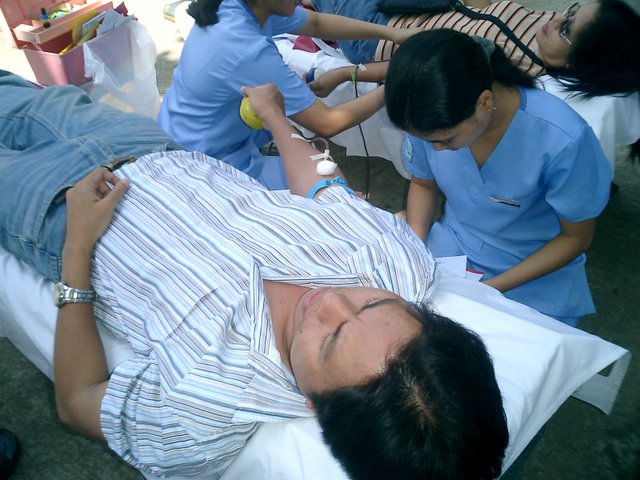
Kapamilya Bloodletting Campaign in Ayala Lagoon


PNRC's Dr. Amour Cantillas attends to blood donors

ACT's Edu Cabanero was one of those screened for blood donation

DYAB Cebu Manager Leo Lastimosa waiting for his turn to be screened

ABS-CBN Cebu Anchor Leo Lastimosa donating blood Posted by Picasa

Tuesday, December 27, 2005

DYAB Anchors and Kapamilyas


DYAB Anchors Juve Villar, June Perez, Randy Jainar and Jun Berongan

DYAB Anchors Jun Berongan, Juve Villar, Merlie Pelen-Neri, Rico Lucena, Randy Jainar and June Perez

DYAB Anchors Juve Villar, June Perez and Jun Berongan

Halad sa Kapamilya volunteers

DYAB Anchors Jun Berongan, June Perez, Juve Villar, Merlie Pelen-Neri, and Randy Jainar

Thursday, October 13, 2005

Call DYAB Absolutely FREE

DYAB AM is the only radio station in the Philippines which you can call from anywhere in the world absolutely free.  Thanks to DB Edwards' VOIP technology through iNTouch, you can call us from 4 a.m. to 12 midnight (Philippine time), Mondays to Fridays.  All you need is a headset.
 
You can greet your Kapamilyas in Cebu and the Visayas and Mindanao over the AM radio station of ABS-CBN Broadcasting Corp. in Cebu Philippines .  You can also use our Internet Phone to air public service announcements for your families and friends in the Philippines.
 
Or you can tell us situationers/updates/comments about major news events in your place of work or urgent concerns of Overseas Filipino Workers (OFWs).  Let DYAB AM serve as your bridge to government agencies which can help you or your loved ones, like the Dept. of Foreign Affairs (DFA), Overseas Workers Welfare Administration (OWWA), Philippine Overseas Employment Administration (POEA), the Office of the President, local government units (LGUs) and private employment and placement agencies.
 
Bawat Pinoy Kapamilya.
 
Tawag Na!

Thursday, October 06, 2005

Call DYAB Absolutely Free


Thanks to DB Edwards' iNTouch VOIP technology, you can now call DYAB AM from wherever in the globe by simply clicking on Leo Lastimosa's picture. You can call during Arangkada's time slot, 6-10 a.m., RP Time.

Tuesday, September 20, 2005

Haydee's Glare

Posted by Sheila Coronel 
PCIJ

ON Sunday night, the members of the Free Legal Assistance Group, which rose to prominence during the Marcos era for its work defending political prisoners and victims of human rights abuses, gave a warm and moving tribute to Haydee Yorac, who died last week after a long bout with cancer.

In a eulogy remembering Yorac's work for FLAG, lawyer Pablito Sanidad recalled how she traveled throughout the country despite the risks to be able to defend the many victims of the Marcos dictatorship. She was, said Sanidad, "a continuing inspiration for a struggle that many of us thought could not be won." She also a wonderful traveling companion whose laughter enabled those around her to momentarily forget how dangerous the times were. "If she was not afraid," Sanidad recalled, "why should we be afraid?"

With Yorac, "there were no hidden agendas, no selfish personal motive, no malice and no ambitions for personal gain or fame." This, said Sanidad, was what set her apart from many others in public life and what made her credible even to those she fought against. All these qualities made her "a powerful force."

The full text of Sanidad's tribute:

Tonight, the members of the Free Legal Assistance Group (FLAG) gather to say a final farewell to our beloved colleague — HAYDEE. We have just lost one of those who were the guiding lights of this organization during the darkest days of the struggle to restore democracy in this country. She leaves us, as we are again struggling to keep that democracy alive.

It is hard to accept that Haydee is gone. Most of us took it for granted that she would always there to turn to when we needed her. How indeed can one imagine this country without Haydee? It is belated and how I wish we could have done this when she was alive, but in behalf of FLAG, may I extend our heartfelt thanks Haydee — for all the guidance and leadership, the encouragement and inspiration, the sacrifices and the lessons learned.

If FLAG feels a special kinship for Haydee, it is because we were lucky to know her as few groups perhaps had the privilege to know her. We came to know her up close, as a colleague and as a friend, for many years. And those were difficult years when the bonds between friends and even relatives were tested to the extreme. We got to know her as a human being long before she would become the icon that she came to be regarded years later. And it is also because of this, that we in FLAG feel a special, personal, intimate sense of loss.

The country may have lost one of its ablest publics servants. FLAG has lost one of its dearest friends and leader. As a law professor she responded quickly to the call of the late Sen. Jose Diokno to join a revolt against a feared dictatorship. A difficult revolution because Ka Pepe asked that it be waged, not with arms, but with the law. And most of the time it was the constitution and the law of the dictator. When it could have been tempting to resort to less peaceful means, FLAG tried hard to work within those parameters.

FLAG would not win many court victories with such a handicap. But much of its success came as they grabbed the law of the dictator and used it to demonstrate that they were not instruments of justice, but of oppression. They were not guarantees of freedom, but chains of control. And the oppressiveness of the law would be used to open the eyes of the people to their bondage and with the knowledge promote unity and empowerment.

And Haydee was ever in the forefront. She was the Regional Coordinator of FLAG for Metro Manila for many years until Marcos fell in 1986. She was equally at home arguing cases before the courts, as she was marching with the parliament of the streets, or lecturing to lawyers and advocates, or consoling victims of tyranny and abuse. For the cause of FLAG, during the dark night of martial law, with little regard for personal safety, she would travel to the mountains of Northern Luzon, to Southern Tagalog, to the Visayas, to Mindanao to serve as a reminder and a continuing inspiration for the struggle that many of us thought could not be won.

It was in the course of all those visits that members of FLAG came to know her as a friend and endear her to them as one of their own. While those times had more days of danger and even death, because many FLAG lawyers fell by the wayside in the search for freedom, there were also its light moments. While many people would perhaps have an image of Haydee as a strict, stern, no nonsense individual, that was not the complete picture. She had a soft, a funny and a human side. We came to know that quality because we traveled with her, ate with her, worked with her and even drank with her. She could hold her drink better than most of us.

She enjoyed exchanging news with FLAG lawyers. They would laugh and joke with her. Her familiar throaty laughter during evenings of fellowship in many far-flung part of this country, would serve to make many young FLAG lawyers momentarily forget the perils of those times. If she was not afraid, why should we be afraid?

She would even allow them to tease her about her hairstyle. Something which Presidents, Generals, Senators or Cabinet members would perhaps not dare do for fear of getting nailed with that famous glare of hers. But she saw very little need to use that glare in FLAG. FLAG was a home of sorts for her. And whatever may have been said about her hairstyle, to most members of FLAG she was one of the most beautiful memorable persons we ever had the honor and the privilege to meet and to know. And we are grateful for that.

She was beautiful in her sincerity and courage. She beautiful in her simplicity. She was lovable in her integrity, in her dedication, in her selfless commitment and in her incorruptibility. And she was beautiful above all because she devoted all those God given virtues, not for herself, but for her country. With Haydee there was little pretense. There were no hidden agendas, no selfish personal motive, no malice and no ambitions for personal gain or fame. She would, if she could, do what was needed to be done, if it was for country.

That perhaps is why she had such a tremendous credibility. That is why she was so respected, not only by her friends, but also by those who had the misfortune of finding themselves on the other side in the many battles that she waged. Despite her strong and seemingly stern public image, few harsh words were ever said against her from those to whom she may have directed her wrath and indignation. That was because they knew that the positions she took were never due to any personal rancor, they were for love of country.

And it is difficult to quarrel with that. And the qualities of Haydee were tested not only by the battles she fought against the government of the dictator, but also by the efforts she exerted to lend credibility to the administrations that came after the fall of the dictator.

When Haydee joined government many had serious misgivings. We feared that her will and idealism alone would not stand, and she would soon be swept away by the currents of intrigue and corruption that plague our government. But she proved us wrong.

She, by herself, was such a powerful force that all Presidents after martial law tried to borrow from that credibility and enlist her help. She joined the Commission on Election, and her COMELEC was definitely far more credible than the Comelec that we have today. With her there, it would have been impossible to produce a "Hello Haydee" tape.

Woe would befall anyone who would have dared call Haydee by phone and tell her what to do in an election contest. Among her favorite stories in FLAG meetings was how she tamed even the much feared Ali Dimaporo.

When she agreed to head the PCGG, many thought it was a dead end. The ghosts of the Marcos regime continued to haunt the corridors of the agencies looking for his wealth and were determined to thwart every effort. Again she proved us wrong. What she achieved would be difficult to equal. It earned her the Ramon Magsaysay Award.

I was about to say that Haydee was a true Filipino patriot. But two nights ago I watched television and saw Ping Lacson. He said Aragoncillo and Michael Ray Aquino are patriots. If that is the new definition of patriotism from someone who wants to be President, then Haydee does not belong in that company.

The irony of Philippines politics is that people who are admittedly far less qualified than Haydee find it easier however to get to the Senate. It is unfortunate that we lose Haydee at this stage of our journey. The country is clearly in turmoil. Our people are as anxious and as they are confused. The future is not clear.

We live today without any clear idea of what may come tomorrow. Our highest ambition is the hope that we will survive. We are in search of someone or something to lead us out of this forest of misery. In the countryside there is disenchantment. They look at our leaders, from all sides, with skepticism. They see one side trying very hard to cling to power by using all means, fair and mostly foul. They see the other side trying very hard to take that power without however any hint or promise of any real and meaningful change. They see unrepentant and arrogant remnants of the regime that Haydee fought against. In the end the choices look suspiciously similar and many find no strong reason to unite under one or the other.

It is during times like these that we miss people like Haydee. From her we would have listened. Not only because she was gifted with a special clarity of mind and objectivity of intellect, but more importantly because what she would have said, would have been accompanied by a moral tone, as credible as it is unquestionable, because it is anchored upon an impeccable record of public service reflective of a true and honest concern for the country.

Perhaps it is that element of moral trustworthiness more than anything else that our people seek in the present crisis. It is it perhaps the failure to recognize it in any of the many aspirants to power and leadership that we continue to drift in uncertainty and discord.

Only the Supreme Law Giver can explain why He would pluck Haydee from our midst, just when we needed her again. Is it because her death would make us understand and appreciate better the messages she was trying to convey with her life and her examples? Only the Almighty would really know.

But it would be a pity if we would not allow Haydee and the life she led to guide us in the search for solutions to the problems of our nation. A nation she loved above anything else and even at the sacrifice of health. We should not ask her for anything more. She has done her part. She has done more than enough. She deserves her peace. If is for us to honor her memory by keeping alive the principles she stood for in public service and use them to judge those who may wish to lead this country and claim they have the best interests of the people. There is one effective test for all of them.

Can they pass the glare of a Haydee Yorac?

Monday, September 19, 2005

Cha-Cha Lobby

Sounding Board : The Charter change foreign lobby

Fr. Joaquin G. Bernas, S.J.
Inquirer News Service

THE MORE NORBERTO GONZALES TRIES TO explain his lobbying contract with an American law firm, the more ridiculous he looks. "Ridiculous," however, is not enough to characterize what has been done. "Treasonous" might come closer.

The first task which the contract gives to the American lobbying group is to "(s)ecure grants or congressional earmarks for support of the Charter change initiative of the President of the Philippines, which would reshape the form of government in the Philippines from its current structure into a parliamentary federal system." Gonzales tried to cover this up by suggesting that what was more important in the contract was the task of seeking a "capability enhancement program for the Armed Forces of the Philippines." The paragraph on capability enhancement, however, comes almost as an afterthought; or more correctly, as a camouflage.

What is being sought is the opposite of the patriotic efforts of Filipino leaders' lobbying in the United States Congress, in the early '30s, for a more honorable Independence Law. Malacañang owes it to the Filipino people to disclose the full story behind this act to subvert the independence of local efforts to revise the fundamental law. The Constitution guarantees the "right of the people to information on matters of public concern." Foreign involvement in the revision of our Constitution is a matter of paramount public concern. It cannot be said that the subject is one of those matters to which public access to information may be limited. The subject does not involve "state secrets regarding military, diplomatic and other national security," even if it involves principally the political aspirations of certain public figures.

Significantly, there is this constitutional rule about financial contributions from foreign governments: "Financial contributions from foreign governments and their agencies to political parties, organizations, coalitions, or candidates related to elections constitute interference in national affairs, and, when accepted, shall be an additional ground for the cancellation of their registration with the Commission, in addition to other penalties that may be prescribed by law." The proscription of financial contribution to political parties from foreign governments is designed to insulate the electoral process from foreign interference. Accepting such contribution comes close to being treasonous.

The evil becomes magnified when the intended object of interference is the re-crafting of the fundamental law. If acceptance of contribution for such object is not explicitly prohibited by the Constitution, it is not because the Constitution does not see it as an evil but rather because the evil is so obvious that no thinking person can miss it. In fact, this is so obvious to many current high-ranking officials that they have quickly joined in the chorus singing that they know or knew nothing about it.

As if the sin could be covered by making it private, Gonzales has gone on to say that public money will not be spent but that money will come or has come from private individuals. Does a government acquit itself from a criminal liability simply by enticing goons to do a crime?

I am not saying that the alleged private contributors are goons. They may be perfectly honorable, if misguided, individuals. But we should be told, under the right to information on matters of public concern, who these private individuals are. Are they Filipinos or are they foreigners? What are their own private interests? This is a matter that is crying for a public confession and not just a simple acknowledgment of a lapse in judgment.

If there is anything that we should learn from this caper, it is that this administration cannot be trusted with orchestrating the revision of our Constitution. For reasons of its own, whether honorable or not, it is dead set on forcing a switch to a parliamentary and federal form of government. The constitutional revision enterprise is a solemnly sovereign one. It should be insulated from influences that can imprint on the fundamental law directions that do or can undermine national interest. We know from our experience in the electoral process that money can be dangled to deaden consciences. Foreign money should not be allowed, much less should it be sought, to influence popular choice.

Betrayal of public trust was the leading accusation against Gloria Macapagal-Arroyo in the impeachment proceeding against her. That accusation has not been cleared. It has merely been swept under the rug by a subservient House of Representatives. Now comes this appeal for financial assistance from a foreign government to subvert the solemn sovereign task of revising our Constitution. If she had nothing to do with it, she should disown it promptly. If she is its occult author, she should rue it publicly.

Several years ago, when the renewal of the Philippine-US Bases Agreement was the issue, senators stood tall to oppose the President's desire. The nation cheered. Revising the Constitution can be more significant and more far-reaching in its effect than the fate of the US Military Bases in the Philippines. Forces within the current administration, in their desire to have their way in the amendatory process, are bent on drowning the Senate in an avalanche of House of Representatives votes. This is a moment when once again senators should stand tall.

Monday, September 05, 2005

Impeachment Limbo

Sounding Board : We will never know for sure

Fr. Joaquin G. Bernas, S.J.
Inquirer News Service

WHETHER or not Gloria Macapagal-Arroyo really won the presidency by defeating Fernando Poe Jr. (FPJ) and Ping Lacson, we will never know. By "we," I mean those of us who had no hand in the much talked-about manipulation of the last presidential election. And, of course, there are also those who do not care to know what does not affect their exclusive lives.

We could have had some degree of certainty had the inquiry made by the Supreme Court, as Presidential Electoral Tribunal, reached completion. But when FPJ died, the inquiry stopped with the Court's refusal to allow his widow to substitute for the candidate-even if only for the sake of finding the truth.

The inquiry could have continued if the third placer in the last presidential election, Lacson, had decided to file his own protest. Under the rules of the PET, a third placer may file a protest. But Lacson, for reasons of his own, chose not to.

If the case filed by Loren Legarda against Noli de Castro reaches conclusion, we may also get an inkling of what actually happened in the presidential race. Some of the election returns challenged by FPJ may also be challenged by Legarda. That, however, will not be enough to clear up the cloud that hangs over Ms Arroyo's presidency.

Meanwhile, evidence that seriously casts doubt on Ms Arroyo's victory has been piling up and coming out in the media. For instance, more than one-half of the latest issue of Newsbreak, a weekly news magazine that is fast establishing a reputation for hard-nosed journalism and integrity, is devoted to stories about the last elections. The lead article is titled "Cheats Inc." and it makes serious allegations in persuasive details. It cites some of Ms Arroyo's operators as saying that "they continued to manipulate the votes even after her proclamation"-evidently in anticipation of an election protest. It also alleges that "when the results from Poe's bailiwicks in Luzon came in, the President's margin from the fixed votes in the Visayas was almost wiped out. Dagdag-bawas was then carried out in Mindanao."

The anticipated election protest materialized, but it was abruptly ended by the death of FPJ. We may have to wait until the Last Judgment to know the truth. In the meantime, the cloud over the legitimacy of GMA's election will continue to haunt her and affect her capacity to govern.

Contrary to the opinion so warmly defended by a congressman from Mindanao, the impeachment complaint against GMA does not have, for an objective the intent of looking into whether Ms Arroyo won or lost. The congressman argued on the floor of Congress that the impeachment complaint should not be allowed because it is an attempt to resurrect the election protest already ended by the death of FPJ. The good congressman must know that an election protest can be filed only by a defeated candidate who claims to have won the election and who is seeking to take the place of the proclaimed winner. That is not the object of the impeachment complaint, whose object is merely to determine whether Ms Arroyo committed an impeachable offense which can justify her removal from office even if she indeed won the elections.

Whether or not this verification will take place in an impeachment trial is now seriously in doubt. The justice committee of the House of Representatives has decided that the three impeachment complaints should be trashed. If one-third of all the members of the House should uphold the decision of the justice committee, the nation would never know whether the allegations in the three complaints are true.

What are some of these allegations?

I start with the Lozano complaint-admittedly the weakest-and his subsequent supplemental complaints. Lozano alleges that: she has been silent about the wiretapped conversations and about the flight of Garcillano; the silence in both instances amounts to a betrayal of public trust; she lied when she confessed to a lapse in judgment when in fact she called several times-meaning, she made several lapses in judgment; she allowed her husband to go into "exile" as part of a cover-up. The Lozano complaint is suspected of being a "friendly complaint" designed to bar more serious complaints.

There was an attempt by the oppositionists to beef up the Lozano complaint by accusing her of impeding the administration of justice in various manners, and of concealing ownership of various pieces of property contrary to law. She is also accused of tax evasion, of acquiescing in the killing of political dissenters, of approving contracts manifestly disadvantageous to the Republic, of accepting bribe from jueteng operators, of undermining the independence of the Commission on Elections, and of knowingly allowing electoral fraud and misuse of government funds for electioneering purposes. Those are a big mouthful of charges.

The authors of the amended complaint sum up their allegations in the following words: "By her conduct, Gloria Macapagal-Arroyo, President of the Philippines, has undermined the integrity of her office, has brought disrepute on the presidency, has committed culpable violations of the Constitution, bribery and graft and corruption, and betrayed the public trust. By so flouting justice and the rule of law, she has committed an unforgivable outrage against the Filipino people to whom she must answer under the Constitution."

Will we ever hear evidence in support of these accusations? It seems that, in the words of veteran politician Sen. Aquilino Pimentel, these complaints are headed for the trash can. Let's just hope that after the verdict is out, no matter how unsatisfactory, the nation and its leaders will buckle down to work and move on to make this place a little better to live in.

Friday, September 02, 2005

Lawyering in RP

Passion For Reason : Bar exam reforms: Finding meaning in ritual

Raul Pangalangan
Inquirer News Service

FOREIGN scholars and diplomats have asked me recently: How come Filipinos love to talk like lawyers? It is bad enough that legalese is itself bad English, but they wonder why ordinary citizens, entitled to the "sovereign prerogative of choice," prefer to be shackled in the technical language of the law even when they ponder fundamental moral or political questions.

There is actually a universal explanation: the "layman's fascination with technicality," and it's not limited to law. You visit your doctor, and what used to be a simple "puwing" [dust particle] in your eye is suddenly a "corneal abrasion"; a fraternity neophyte's "paso" [skin burn], suddenly "hematoma"; you get an A-OK in your annual medical, and you say the test results were "unremarkable."

There is a vintage Three Stooges scene. Their jalopy conks out in the middle of the desert, and Larry turns to Moe and says: "I thought you said you could fix this car?" Moe replies: "Sure, I'm an expert. If the distributor doesn't distribute and the differential is different, this car will not run!"

But there is also a uniquely Filipino explanation: the traditional hegemony of lawyers in our public life. Just list the former presidents: Manuel Quezon, Sergio Osmeña, Jose Laurel, Manuel Roxas, Eldipio Quirino, Carlos Garcia, Ferdinand Marcos. The nation has turned to law as a "secular religion" because, bereft of a national consensus on much else, for us the law embodies the only provable agreement on how and when government can step into our lives, what Holmes called the "incidence of the public force."

The high priests of that creed are the lawyers, and we select the guardians of the faith through the annual ritual known as the bar examinations. On each of the four Sundays in September, we reenact this rite of passage. This Sunday, 5,758 candidates are expected to take the bar examinations at the De La Salle University's Taft campus, and of these only 20 to 30 percent are expected to pass.

The Constitution gives the Supreme Court the sole power to admit lawyers into the profession. Each year, the Court designates one of its justices to chair the bar exam committee, and he then appoints a bar examiner for each of the eight subjects in the exam. The examiners submit their draft questions to him, and tradition has it that he makes the final call on which questions will be asked. This year, Justice Romeo J. Callejo Sr. chairs the committee of examiners.

The exam is the sole device for quality control for aspiring lawyers. The Court effectively tells the law schools what courses to offer, what laws to teach, what skills to develop among their students.

For example, when the Court's Study Group on Bar Examination Reform proposed to drop Taxation as a bar subject, it was feared that law schools would no longer teach the subject. When I served as a bar examiner in Political Law many years back, I was given strict instructions: Do not ask questions requiring rote-memory. Do not ask for enumerations and definitions. Do not ask objective-type questions; ask essay-type, problem-based questions. Do not look only at the conclusion but give credit to analysis and reasoning. In shaping the bar exams, the Court also shapes the way the law schools will teach their students.

Yet the Study Group has found that the bar exams have also retarded legal education. "[P]aradoxically, the very existence of the examination has stymied in a significant manner legal education. Many if not most law schools have made of passing the Bar Examinations the principal, or even sole objective of legal education. This has without doubt impoverished legal education...."

Instead of training students to practice law and serve clients, schools train them in what American law schools deride as "bar law"-"short answer questions" based on a simplistic set of facts vastly out of touch with real-life problems that are rarely so neat and tidy.

I have elsewhere discussed the most radical reforms adopted by the Court in July 2004, based on a program drafted by Justice Vicente Mendoza, and to be implemented in the coming years. For the first time, the reforms focus on the sociology of the exams. Because of the historical fixation on the bar exams, the entire system is geared toward plugging all exam leakages and insulating the examiner from undue pressures. The examiner is solitary and ad hoc, his identity shrouded in secrecy until he grades all 5,000 exam booklets over five months. The Mendoza reforms will allow panels of examiners and checkers who can learn from one another, and will safeguard the integrity of the exams through the integrity of these people and scientific ways of grading.

Still, the Court has no choice but to tighten the exams because of laxity and grade inflation in our schools. It performs the winnowing-out function that many law schools have abdicated in exchange for higher enrollment or, characteristically Filipino, for the goodwill and misplaced thanks of undeserving students. They merely shift to the Court and its bar confidant the role of being the bad guy.

Historically, the 30-percent passing rate in the Philippine bar exams is not too low -- Korea's is 2 percent and Japan's 3-5 percent. But there are fundamental differences. Abroad, there are law-related jobs for those who don't make it, and they are not stigmatized. In the Philippines, even the 30 percent who pass may end up underemployed. Moreover, both Korea and Japan have begun reforming their bar examinations: Japan in particular now aims for a 25-percent passing rate and has created new law schools.

As I told our gladiators at the Taft Avenue collosseo, they who aspire to be "wise in their calling," remember the call: "Strength and honor. At the signal, unleash hell. What we do in life echoes in eternity."

Monday, August 29, 2005

Reopen FPJ Protest

'Act of judicial statesmanship'

Inquirer News Service

I FIRST encountered this highly profound phrase in an opinion of former Senate President Jovito Salonga on the Supreme Court decision that declared President Joseph Estrada as constructively resigned. The decision was met with vigorous opposition from some of the country's legal minds, for being unconstitutional. It became the subject in the columns of leading opinion writers, who took their respective sides—for or against. Salonga came out with an opinion, saying that what the Supreme Court did was an exercise of judicial statesmanship. He called the Davide Court an activist court.

I recently encountered the phrase again in an Inquirer column of Fr. Joaquin Bernas. He urged the Supreme Court to reopen the protest case filed by defeated presidential candidate Fernando Poe Jr.—as an act of judicial statesmanship. The case was pursued by FPJ's wife, Susan Roces, after his death. But Roces' petition to substitute for her husband was struck down by the high court on a technical ground. Father Bernas argued that with the reopening of FPJ's protest case, the attention of the nation would be focused on the Presidential Electoral Tribunal—which would pursue the case vigorously, until such time that it would be able to determine who really won in the May 2004 presidential election.

The frantic call for President Macapagal-Arroyo's impeachment and the maddening protest rallies demanding her resignation would then become unnecessary. But this could only be realized if the Supreme Court exercised, once again, that act of judicial statesmanship. If the honorable justices did it in January 2001 to save the nation from chaos and bloodshed, why couldn't they do it now for the same reason? And it would undoubtedly be a defining moment for Hilario Davide Jr., who is retiring as chief justice this December.


—CESAR T. PUENTENEGRA, Gullas Law School, University of the Visayas, Cebu City

Tuesday, August 23, 2005

Erap's Bail

Santiago defends plan on Estrada release

Veronica Uy Tetch Torres
INQ7.net

TALK of reconciliation between former president Joseph Estrada and incumbent Gloria Macapagal-Arroyo has legal basis and is not just politicking as alleged by Senator Joker Arroyo, Senator Miriam Defensor-Santiago said Monday.

She said that while capital offense was non-bailable, bail was "a matter of discretion on the part of the judge" in such cases.

Citing the Constitution, Supreme Court Administrative Circular No. 12-94 (1994), and the ruling in the 1995 case of Santos vs. Ofilada, Santiago said, "The ongoing reconciliation talks between him [Estada] and President Arroyo should be pursued because there is legal basis. The talks are not mere pretense, as alleged by others."

"Because president Estrada is charged with a capital offense, he is not entitled to bail as a matter of right. But he can still apply for bail, as a matter of discretion, and a hearing will be mandatory."

She reminded Senator Arroyo of a similar capital offense case where he served as defense lawyer of the late Lino Brocka and Behn Cervantes and she was judge.

"Among the defense lawyers [at that time] was Joker Arroyo. He is reported [now] to be claiming that bail can no longer be granted in a capital offense case, which seems to be a contradiction of the position he took before me, when I was RTC judge," she said.

Santiago said granting bail would balance the right of an accused person to provisional liberty and the duty of the state to protect our people against dangerous elements.

"If we apply this two-fold test to [former] president Estrada's case, my view is that release on bail will not render him a danger to society," she said.

"Further, because of his age, health, and status as former president, I do not believe that he will flee the country. I humbly opine that procedural due process should be followed, and after due hearing, if warranted, president Estrada should be admitted to bail," Santiago said.

Meanwhile, Justice Secretary Raul Gonzalez doubts whether the Sandiganbayan anti-graft court will allow Estrada to be released on recognizance.

Under the revised rules on criminal procedure, recognizance involves the release of an accused without bail to someone of high moral standing in the community.

"With the magnitude of his case, I doubt if it is within the ambit of recognizance," Gonzalez told reporters Monday.

The Sandiganbayan is set to resolve Estrada's motion for bail, which he filed last July 27, claiming that the government's case against him is weak.

Estrada said he preferred to stay with his mother at Polk Street in Greenhills, San Juan municipality if the anti-graft court will grant his petition.

Special Prosecutor Dennis Villaignacio has submitted his opposition to Estrada's petition in early August.

Estrada is on trial for plunder, a crime punishable by death under Philippine law.

Environment and Natural Resources Secretary Michael Defensor disclosed last week that part of reconciliation talks was Estrada's release on recognizance -- a plan Senator Arroyo belittled as mere politicking.

Monday, August 22, 2005

Betrayal

Sounding Board : Betrayal of public trust

Fr. Joaquin G. Bernas, S.J.
Inquirer News Service

THERE is a battle royal going on as to which impeachment complaint the Committee on Justice should take up.

The line of defense being put up by the President's lawyers is that only Oliver Lozano's complaint should be entertained because anything after Lozano's complaint would be a different second or third complaint prohibited by the Constitution. The Constitution says that only one impeachment proceeding against a respondent may be initiated within one year. In other words, the President's lawyers equate "complaint" with "proceeding."

Let us look at the main pillar of Lozano's complaint. He bases it on "betrayal of public trust." The example he gives of betrayal of public trust is the phone call made to an official of the Commission on Elections, a phone call which the President has admitted with public display of compunction, and for which she confessed "lapse in judgment." And since several phone calls were involved, she as much as admitted multiple lapses in judgment. But is that all that betrayal of public trust means? Is it limited to one example, or can it cover a multitude of other sins? The President's lawyers seem to be saying that Lozano, having given one example, may not give more. Such a stance is worse than just a lapse in judgment; it is an attempt to water down an offense solemnly enshrined in the Constitution.

We must look to the history of the phrase "betrayal of public trust" as it is now found in the 1987 Constitution. It is a phrase not found in the United States Federal Constitution whence our impeachment system originated. It is not found in our 1935 Constitution either, or in the 1973 Constitution. But the 1973 Constitution added "graft and corruption" as another ground for impeachment in order to tighten the screws on misbehaving public officers. Not content with previous texts, however, the 1986 Constitutional Commission added "betrayal of public trust" as another ground for impeachment. Evidently, they wanted to make the screws even tighter. What did the 48 commissioners mean?

Commissioner Ricardo Romulo, in response to a query from Commissioner (later Supreme Court Justice) Florenz Regalado, said that the phrase "betrayal of public trust" was meant to be a catch-all phrase to cover any violation of the oath of office. Commissioner Rustico de los Reyes, who was responsible for the insertion of the screw-tightening phrase, said that it referred to all acts, even if not punishable by statute as penal offenses, which render the officer unfit to continue in office. He enumerated "inexcusable negligence of duty, tyrannical abuse of power, breach of official duty by malfeasance or misfeasance, cronyism, favoritism, etc. to the prejudice of public interest and which tend to bring the office into disrepute." To which Romulo added "obstruction of justice." Expressly excluded, however, were "profanity, obscenity, habitual drunkenness while performing official duty"-perhaps, in the belief that these are understandable macho vices!

Significantly, Commissioner Blas Ople, who had sought to add "manifest and gross disregard of the popular will" as another ground, withdrew his amendment after the Committee explained that such addition would in fact narrow the grounds for impeachment by requiring that the offense be gross. Moreover, Commissioner (former Chief Justice) Roberto Concepcion cautioned that additional particularization would have the effect of weakening the provision under the principle expressio unius est exclusio alterius.

To further understand the import of "betrayal of public trust" as a screw tightener, it is important to compare it to how the 1986 commissioners understood "culpable violation of the Constitution." The accepted view in the Commission was that "culpable violation of the Constitution" implied "deliberate intent, perhaps even a certain degree of perversity, for it is not easy to imagine that individuals in the category of these [impeachable] officials would go so far as to defy knowingly what the Constitution commands." Moreover, as Commissioner and now Chief Justice Hilario Davide observed, "betrayal of public trust," as already explained, required much less than culpable violation of the Constitution and, in effect, already included everything in the other enumerated grounds for impeachment!

Having seen the broad meaning of "betrayal of public trust," we next look at what the Constitution prohibits. It prohibits the initiation of more than one "impeachment proceeding." It does not necessarily prohibit more than one complaint. More than one complaint would be prohibited only if the multiple complaints would require more than "one proceeding." But if they can be logically and conveniently combined into one proceeding, there would be no violation of the Constitution.

In the current controversy, the so-called "amended complaint" and the Lopez complaint, both transmitted on the same day to the Justice Committee together with the Lozano complaint, are nothing more than "bills of particulars" to accompany the Lozano complaint. They both elaborate on the one constitutional offense of "betrayal of public trust." For constitutional purposes, therefore, what is being initiated is only "one proceeding involving one complaint but with an extended bill of particulars."

I can understand, however, why the President's defenders argue the way they do. They must realize that if the "bill of particulars" is elevated to the Senate, the President will be tarred and feathered and be made to squirm. I guess we must bemoan the conclusion that the presidential defenders and their client do not wish to face the music.

Monday, August 15, 2005

Bernas' Column

Sounding Board : Jointly or separately

Fr. Joaquin G. Bernas, S.J.
Inquirer News Service

SOMETIME ago I was told by a friend, who was a denizen of the inner sanctum of the House of Representatives, that my column, where I said that the two houses of Congress should vote separately when proposing amendments, did not sit well with some of the overt advocates of constitutional revision. Now, however, I hear an opposite story. A friend, who listened to Speaker Jose de Venecia speak before a recent forum on parliamentary government, said that the honorable Speaker cited a column of mine, where I supposedly said that the two houses should vote jointly when proposing amendments.

Well, at least I should be grateful that my columns are read, even if sometimes misread, deliberately or otherwise. I think it was Chesterton who said, "My sins are scarlet, but my books are read." But for the record, and for the benefit of the Speaker—if indeed he attributed to me something I never said—let me clear things up.

What the Speaker is reported as having said is an indication that, should Congress decide to propose amendments to the Constitution, there will be a battle royal involving the question of whether the two houses of Congress should vote as one body or separately. In earlier debates regarding this issue, it had already been argued that when Congress proposes amendments, it acts as a constituent assembly and, therefore, it is not bound by the normal rules that govern Congress. I cannot accept that argument.

I begin with a fundamental principle: We have opted for a bicameral Congress. When the 1986 Constitutional Commission was drafting the current Constitution, the debate on bicameralism or unicameralism was intense. I took the side of unicameralism. When the moment of reckoning came, the side I favored, the unicameral side, lost. Yes, by one vote. The final vote was for bicameralism, 23-22.

I must confess now that I do not regret having lost that vote. Today, I thank all the 23 who voted against unicameralism. In retrospect, I now believe that if we had voted for unicameralism, the US military bases would probably still be in Subic and Clark. Likewise, if we had voted for unicameralism, extension of term limits or total elimination of term limits would be a done deal by now.

The choice in favor of bicameralism was deliberate. One of the reasons proposed in support of bicameralism was that it allowed for mutual correction. Commissioner "Soc" Rodrigo, speaking from 12 years' experience in the Senate, gave a practical illustration which, I suspect, is also operative today. He said:

"This was our experience in the Senate of which I was a member for 12 years. There were times when members of the House of Representatives would come up and say: 'Soc, mayroon kaming inaprubahang bill doon sa Lower House; masama, hindi ko gusto pero hindi ako makatanggi sa isang lider. Kayo na ang bahala sa Senado, patayin ninyo ang bill na iyon.' This happened several times. And, of course, since the senators were elected at large like the President of the Philippines, they could stand up to the President, and this can be attested to by facts. The senators could refuse the President or even take a stand against that of the President even if the President belongs to their own party."

Bicameralism means two houses acting autonomously and occasionally checking each other. This is a fundamental principle in our Constitution. The two houses work separately. That is the general rule. The larger House may not swallow the smaller house. If fusion is to be allowed at all, the Constitution says so. And whenever the Constitution says that the two houses meet together, the Constitution is careful to dispel any notion that autonomy is thereby being put aside. In such occasions—as when declaring a state of war, or acting as a board of canvassers for presidential and vice-presidential elections—the Constitution is careful to warn that, even in joint session, they should vote separately. Similarly, the 1935 Constitution, which said that when proposing amendments Congress should be "in joint session assembled," was careful to specify that even then the two houses should vote "separately."

The present Constitution now says: "Any amendment to, or revision of, this Constitution may be proposed by: (1) the Congress, upon a vote of three-fourths of all its Members . . ." The power is given to Congress. We should remember that there are two houses in Congress. Moreover, the two houses are not called to come together in joint session. They can stay where they are. They are empowered to propose amendments as they are where they are. Congress, as is, is simply given a constituent function, that is, the power to propose amendments.

Indeed, the two houses may agree to come together for a joint session. Coming together does not nullify the bicameral character of Congress. Only a constitutional revision can transform the two houses into a unicameral body. Voting separately, however, is of the essence in a bicameral Congress. It cannot be voluntarily surrendered either by the Senate or by the House.

The constituent function is given to a bicameral legislature. The two houses, therefore, should act as a bicameral legislature—voting separately, able to check each other, and not reduced to one monstrous body marching to the same drumbeat. Let us hope that the Senate will not surrender its autonomy to the larger house.

Saturday, August 13, 2005

Monsod's Column

Get Real : An ouster call in Batangas

Solita Collas- Monsod
Inquirer News Service

BATANGAS State University (BSU) president Ernesto de Chavez is using President Gloria Macapagal-Arroyo as his model in refusing to leave his post. Reacting to a demonstration by faculty and students who demanded that he step down, De Chavez said in a press conference held last Saturday: "Ang Presidente nga ng Pilipinas nira-rally araw-araw at gustong patalsikin pero hindi pa rin umaalis ... normal na 'yang rally dahil sa ekonomiya natin. Hindi ako aalis sa puwesto. [Daily rallies are being held against the President of the Philippines by people who want to boot her out, but she still doesn't leave ... those rallies are normal because of the state of our economy. I will not leave my post.] If I leave the post I will be charged of (sic) abandonment by the Board of Regents."

I guess misery loves company. But the parallel that De Chavez tries to draw is simply not there. Charges have been filed against him, formal investigations have been conducted, and after due process, Ombudsman Simeon Marcelo ruled last July 12 that "Respondents De Chavez, Lontoc Sr., Ligaya and Lontoc Jr. are hereby found guilty of Dishonesty and Grave Misconduct and are, thus, meted the penalty of Dismissal from the Service..."

The student-faculty demonstrations occurred because he refused to leave. In the Arroyo case, the demonstrations are being held to pressure her into resigning even before impeachment proceedings have followed their due course and before she has been found guilty.

Moreover, while Ms Arroyo recognizes the authority of Congress to impeach her and is ready to step down if found guilty by the Senate, BSU's De Chavez does not recognize the authority of the Ombudsman who, he claims, has no right to discipline him, because only BSU's board of regents (BOR) has the appointing and disciplining authority over him. To quote him again: "We are not even under the CHED [Commission on Higher Education] or Civil Service [Commission]. We have our own charter, 'meron kaming BOR' [we have a BOR]. We are with CHED but we are not under CHED. 'Hinihintay lamang namin ang anumang magiging desisyon ng Civil Service Commission at nakahanda kaming sagutin ito.' [We are just awaiting whatever will be the decision of the Civil Service Commission and we are ready to respond to it.]"

Whew. That's pretty arrogant stuff and fuzzy thinking. The Ombudsman does have administrative authority over all government officials, to which category state university officials belong. Yes, the BOR is the appointing power, but there are limits to its independence. In the case of the BSU, the BOR chair is CHED Commissioner Saturnino M. Ocampo Jr., with the chairpersons of the Senate and House education committees and the regional director of the National Economic and Development Authority as members. They are surely aware of their powers and responsibilities.

But what exactly did De Chavez and others -- including a brother-in-law who is BSU's vice president for academic affairs and a nephew (the brother-in-law's son) -- do to merit the dismissal? Per the Supplemental Resolution of Ombudsman Marcelo, first, there was the matter of the unauthorized collection of graduation fees, with no official receipts issued, and with the collected fees never deposited in a government bank for the account of the BSU.

Then, it seems, the De Chavez family (including a brother-in-law) was involved in the business of renting caps and gowns, and apparently used its members' position to become the exclusive supplier of these paraphernalia to the faculty and graduating students.

In addition, De Chavez and his nephew were found by the Ombudsman to have collected Internet fees from students (again with no official receipts) with the funds deposited in their joint account. The funds were transferred to the regular trust fund of BSU 18 months later, only after charges were filed against them -- but with a shortfall.

Furthermore, there are matters like the collection of on-the-job training and related learning experience fees (again with no official receipts and funds deposited in a non-government bank); the conduct of comprehensive examinations and the (unauthorized) collection of fees. The Ombudsman has also asked the Civil Service Commission (CSC) to look into charges of nepotism and other administrative issues.

Why then, despite the Ombudsman's resolution, dated July 12, 2005-finding De Chavez, et al., guilty of dishonesty and grave misconduct, with a penalty of dismissal-is De Chavez still in his post (and reportedly wreaking all kinds of vengeance)? Is the BOR, as some detractors claim, in his pocket?

Nothing Machiavellian here. The simple reason is that the Office of the Ombudsman did not send a copy of its resolution to the BOR with the request that the latter implement it-instead, the resolution asks the CSC to implement it. So the BOR is still awaiting formal notice from the Ombudsman or the CSC although it is informally aware of the decision and has already initiated consultations and made contingency plans, BOR Chair Ocampo said. CSC Chair Karina David says that her office is puzzled that the Ombudsman has asked them to implement what the latter should be doing itself, hence the delay.

A bureaucratic snafu? No. Ombudsman Marcelo is not dumb. It turned out that he issued the resolution while there was some legal question about his office's powers. But since then, the Supreme Court has come up with a definitive ruling that, indeed, the OO does have administrative authority over all government officials other than those who are impeachable.

So it is not the case that De Chavez is following in Gloria Macapagal-Arroyo's footsteps. It may in fact be the other way around.

Friday, August 12, 2005

ABS-CBN Cuts Costs

ABS-CBN to lay off 210 more

Clarissa Batino
Inquirer News Service

TWO HUNDRED and ten more employees of ABS-CBN Broadcasting Corp. are going to lose their jobs between now and October, casualties of the network giant's strategy to cut cost and regain its lead.

"We plan to (terminate) 360 employees or 20 percent of our workforce by September or early October," ABS-CBN president Luis Alejandro said. "This is part of our restructuring to cut cost."

Alejandro said the company had laid off 150 employees so far. It had also reduced by half the number of its management officers, from 12 to six.

The Lopez-owned network said it would save P350 million a year from the salaries of the employees to be fired.

The savings compare with the retirement benefits, expected to cost about P500 million, that the company will have to provide. The benefits will be financed from the proceeds of a new deal struck by its profitable global unit.

ABS-CBN has 1,800 regular employees. Of the 150 who lost their jobs, 35 were editors and reporters under News and Current Affairs. The 35 got the best termination package, according to sources.

The 150 employees received three months' salary for every year of service, which translated, according to sources, millions of pesos to several highly-ranked employees.

"We started with the News and Current Affairs, then sales and marketing, then we are doing the engineering department this week to next week," said Alejandro.

He said even the network's talents were asked to "cooperate" in the effort to cut costs.

Several celebrities, he said, had agreed to reductions in their talent fees and no talent got an increase. "This should translate to savings of about 10 percent of our costs," said Alejandro, who declined to name the stars who took pay cuts.

"We are sticking to our three-point recovery plan. The strategies of focusing on prime time ratings, optimizing production cost and cutting expenses will be continuing," Alejandro said.

Tuesday, August 09, 2005

Sacrifices

The 'ifs' for Philippines to take off

Inquirer News Service

OUSTING Gloria Macapagal-Arroyo from office is not the magical solution to our problems. It will not pull our nation from the morass of poverty. But replacing our system of government through Charter change will be worse. Her state of the nation address was dismaying but, at least, I agree with her on one thing: "Ours is a country divided."

Yes, our country will not be able to take off because we are not united as a team. There is a Philippines of power-hungry leaders living in luxury; and a Philippines of a starving people whose power to vote has been exploited and undermined by the first Philippines.

No, it is not our system of government but our leaders whom we must change. Charter change will only dance us to hell because our present leaders have no respect for honesty and justice. For what are we teaching our children by ignoring the "Hello Garci" scandal? That it is OK to cheat?

Ms Arroyo said: "Perhaps we politicians have done our best; but maybe our best is not enough, given the present system. Perhaps, we have strained the present political system to its final limit." Yes, our politicians have done their best to keep themselves in power illegally. Their best in this is more than enough. "Tama na!" [Enough!]

What more sacrifice do the Filipinos need to make? Two-thirds of the Filipinos are living below the poverty line while Mike Arroyo doesn't care about staying in a $20,000-a-night hotel suite. What more does Ms Arroyo want Filipinos to do? Miss breakfast and lunch just so they can afford to pay more taxes?

For as long as we have dishonest, corrupt and wasteful leaders, our country will never move forward.

If only the present administration stopped the use of luxury cars by government, then our people wouldn't have to pay more taxes on their meager income. If only Congress abolished the pork barrel, then the government could allot more funds for roads and education.

If only our courts wouldn't sell their decisions to the rich and the powerful, then the poor wouldn't feel oppressed. If only our journalists could be given protection, then we could preserve the sanctity of democracy.

If only the nation's sacrifices were shared by the ruled and rulers alike, our country would now be on the verge of taking off.

MILES RABIE, Tucson, Arizona, USA (via e-mail)